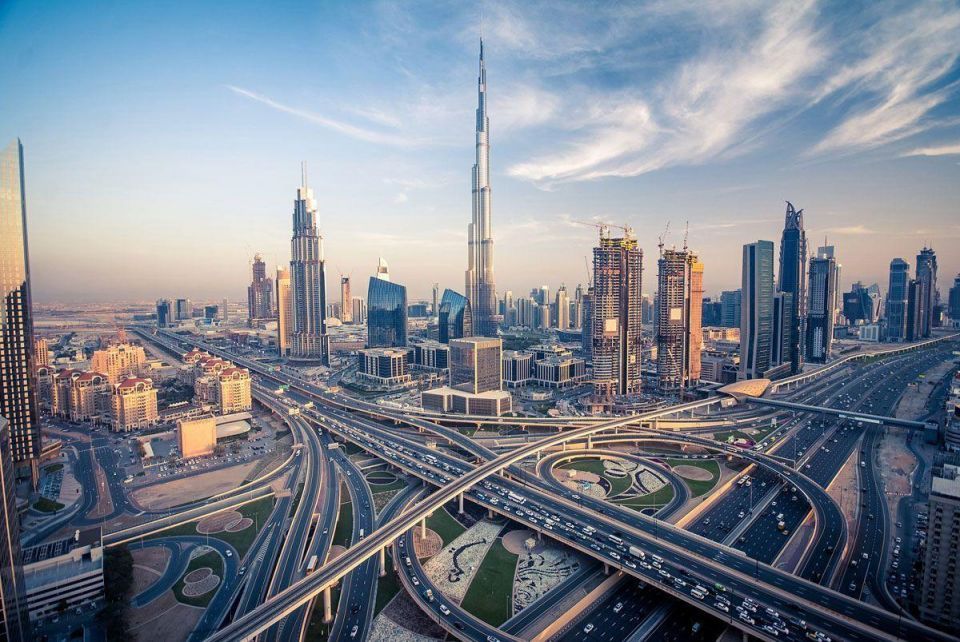
Doubtless when you have heard about Dubai you noticed that the description was loaded with superlatives: the biggest, the tallest, the grandest, the most expensive. It’s true. Dubai is synonymous with grandeur. However, if you are keen to get to know the real Dubai you will soon discover that this larger-than-life image is akin to a peacock strutting around with its tail feathers fanned. It is the image that the city is projecting to the rest of the world and, while not untrue, underneath all that posturing there is a socially and economically sophisticated city ripe with opportunity. All of that coupled with gorgeous weather for most of the year, it is no wonder expats continue to flock to Dubai from all across the globe.

Lifestyle — If you compare the standard of living in Dubai to that of almost anywhere else in the world, you will find that it outpaces them all. With opportunities for higher salaries and every imaginable luxury available, expats can live here with comforts they either could not afford or that were not available back home. But it is not all high-end and five-star. The city offers housing, entertainment and amenity options to suit every budget, so your lifestyle here can be as extravagant or as economical as you choose.

Weather — For anyone who must suffer through wet and frigid winters, moving to Dubai could be your saving grace. For about 8 months out of the year temperatures hover pleasantly around the mid-twenties and the sun shines practically every day. It is perfect for strolling on the beach, having a drink on the balcony or dining alfresco. During the summer months it does get sweltering hot, with temperatures sometimes reaching as high as 50°C. But never fear! There are plenty of indoor activities to keep you busy and everywhere you go will have the AC on blast.

Business and Economy — Dubai seemed to magically rise up from the sand dunes overnight just 44 years ago. But in that short period of time it has managed to make a name for itself as the foremost business and leisure hub in the region. Its economy is well-diversified and on an upward trajectory. It is a common misconception that Dubai makes its money in the oil industry; but in fact less than 5% of their Gross Domestic Product comes from petroleum and natural gas. The remaining 95+% can be found in tourism, international trade, banking and finance, information technology and real estate.

Safety— All the perks in the world are quite useless if you don’t feel safe in your home. Fortunately, Dubai is one of the safest places in the world. With a virtually nonexistent crime rate, you never have to worry about being hassled or bothered when walking alone at night regardless of whether you are male or female.


DUBAI MARINA

Dubai Marina is a district in Dubai, United Arab Emirates. Dubai Marina is an artificial canal city, built along a two-mile (3 km) stretch of Persian Gulf shoreline. When the entire development is complete, it will accommodate more than 120,000 people in residential towers and villas. It is located on Interchange 5 between Jebel Ali Port and the area which hosts Dubai Internet City, Dubai Media City, and the American University in Dubai. The first phase of this project has been completed. Dubai Marina was inspired by the Concord Pacific Place development along False Creek in Vancouver, BC, Canada.

There have been many instances of marine wildlife (especially whales and sharks) entering the marina, because of its proximity to the open sea.


The Walk

Dubai Marina Towers

The Walk at Jumeirah Beach Residence is a 1.7-kilometre strip at the ground and plaza level of the complex, it was developed by Dubai Properties, and was completed by 2007 and opened officially in August 2008.

The Beach

The Beach at Jumeirah Beach Residence is a retail complex being constructed on the beach in front of JBR by Meraas Holding, a company owned by SheikhMohammed bin Rashid Al Maktoum, Vice-President and Prime Minister of the UAE and Ruler of Dubai. The development, comprising four plazas, will occupy the bulk of the beach between the Hilton and Sheraton hotels. The complex houses a number of levels of parking as well as seventy retail and food and beverage outlets, together with entertainment facilities.

Al Sahab

Al Sahab is a waterfront twin tower which directly overlooks the largest bay of water at Dubai Marina. From the level three Marina homes upwards, all residents have views over Dubai Marina. Its developed by Emaar and considered to be Dubai Marinas most premium tower. It benefits from the highest price per sq ft in Dubai.

Al Majara

Al Majara is a five-building residential complex comprising high-rise waterfront apartments adjacent to where the old Dubai Marina Yacht Club used to be and overlooks the largest part of the bay.

Marina Promenade

Marina Promenade is a residential enclave in Dubai Marina. Nestled within the panoramic confines of Dubai Marina, it overlooks the widest and most scenic part of the bay and is ideally located opposite the Dubai Marina Yacht Club. The Marina Promenade comprises six residential towers and villas with views of the bay.

Marina Quays

Marina Quays is 20 meters long, over the water on the waterfront. Along with apartments and villas, the development has shops and other outlets. Marina Quays is a three-building residential development; the buildings are Quay East, Quay West and Quay North.

Park Island

Park Island is a four tower residential development comprising Blakely, Bonaire, Fairfield and Sanibel. The towers within Park Island have been placed with parks and landscaped gardens.

Dubai Marina Mall

Dubai Marina Mall is a shopping mall located in the center of Dubai Marina, for residents and visitors of the Dubai Marina. It features 140 retail outlets, spread over 390,000 sq ft of gross leasable space, making it one of the largest shopping malls in Dubai. The mall has been completed and opened in December, 2008

ATLANTIS THE PALM

Atlantis The Palm, Dubai is a luxury hotel resort located at the apex of the Palm Jumeirah in the United Arab Emirates. It was the first resort to be built on the island and is themed on the myth of Atlantis but includes distinct Arabian elements. The resort opened on September 24, 2008 as a joint venture between Kerzner International Holdings Limited and Istithmar.

Hotel

The 1,539 room nautically themed resort has two accommodation wings, consisting of the East and the West Tower, linked together by the Royal Bridge Suite. It is complemented by the Aquaventure water park and the Nasimi Beach, which frequently plays host to concerts and other events.

In popular culture

Atlantis, The Palm at night

  • A task in the sixth leg of The Amazing Race 15 took place at its water park. The 14 team members had to slide down the resort’s Leap of Faith water slide, which dropped them along 60 m (200 ft) and 30 m (90 ft) down an 84° incline and through a tunnel beneath the aquarium’s shark lagoon. After retrieving the clue at the bottom of the exit pool, teams had to search the water park for Dolphin Bay Beach located near a lagoon, which was the sixth pit stop in the race. However, only 13 team members made it down the slide, as one of the team members, Mika was afraid of heights and water, and she and Canaan were eliminated. The water park was visited once again on the eighth leg of The Amazing Race 28. Teams were required to solve a puzzle at an aquarium for the Roadblock. Following that, they had to had to slide down the Poseidon’s Revenge water slide as a miscellaneous task
  • Bollywood film Happy New Year, directed by Farah Khan starring Shah Rukh Khan, has been shot almost entirely at the Palm. The film also stars Abhishek Bachchan, Deepika Padukone, Boman Irani, Sonu Sood, and Vivaan Shah and released on October 24, 2014.

BURJ KHALIFA


The Burj Khalifa  known as the Burj Dubai prior to its inauguration in 2010, is a skyscraper in Dubai, United Arab Emirates. With a total height of 829.8 m (2,722 ft) and a roof height (excluding antenna) of 828a m (2,717 ft), the Burj Khalifa has been the tallest structure and building in the world since its topping out in late 2008.

Construction of the Burj Khalifa began in 2004, with the exterior completed five years later in 2009. The primary structure is reinforced concrete. The building was opened in 2010 as part of a new development called Downtown Dubai. It is designed to be the centrepiece of large-scale, mixed-use development. The decision to construct the building is based on the government’s decision to diversify from an oil-based economy, and for Dubai to gain international recognition. The building was originally named Burj Dubai but was renamed in honour of the ruler of Abu Dhabi and president of the United Arab Emirates, Khalifa bin Zayed Al Nahyan;Abu Dhabi and the UAE government lent Dubai money to pay its debts. The building broke numerous height records, including its designation as the tallest building in the world.

Burj Khalifa was designed by Adrian Smith, of Skidmore, Owings & Merrill, whose firm designed the Willis Tower and One World Trade Center. Hyder Consulting was chosen to be the supervising engineer with NORR Group Consultants International Limited chosen to supervise the architecture of the project. The design is derived from the Islamic architecture of the region, such as in the Great Mosque of Samarra. The Y-shaped tripartite floor geometry is designed to optimize residential and hotel space. A buttressed central core and wings are used to support the height of the building. Although this design was derived from Tower Palace III, the Burj Khalifa’s central core houses all vertical transportation with the exception of egress stairs within each of the wings. The structure also features a cladding system which is designed to withstand Dubai’s hot summer temperatures. It contains a total of 57 elevators and 8 escalators.

At a certain point in the architectural and engineering process, the original Emaar developers ran into financial issues, and required more money and economic funding. Sheikh Khalifa, the ruler of the United Arab Emirates, granted monetary aid and funding, hence resulting in the changing of the name to “Burj Khalifa”. The concept of profitability derived from building high density developments and malls around the landmark have proven successful. Its surrounding malls, hotels and condominiums in Downtown Dubai have generated the most considerable revenue from the project as a whole, while the Burj Khalifa itself made little or no profit.

Critical reception to Burj Khalifa has been generally positive, and the building has received many awards. There were complaints concerning migrant workers from South Asia who were the primary building labor force. These centered on low wages and the practice of confiscating passports until duties were complete. Several suicides were reported.

JUMEIRAH BEACH

Jumeira Beach is a white sand beach that is located and named after the Jumeirah district of Dubai, on the coast of the Persian Gulf. It stretches along the coast south of the city’s historic district to the junction with The Palm Jumeirah and terminates between the southern end of the Jumeirah Beach Residence (adjacent to the Dubai Marina district) and the port facilities at Jebel Ali.

The adjacent districts to the beach include Jumeirah (1, 2, and 3), Umm Suqeim (1, 2, and 3), and Al Sufouh, though colloquially, this entire string of neighborhoods and districts from the southern edge of Kerama to the terminus of the Palm Jumeirah at Knowledge Village is sometimes referred to as the Jumeirah Beach Road area.

The beach and its frontage feature large hotels, resorts, and housing developments, including the Burj Al Arab (Arab Tower) hotel, Wild Wadi Water Park, Jumeirah Beach Hotel, and the old-style Madinat Jumeirah, a hotel and shopping complex.On one side of the burg al Arab hotel is a water park (wild wadi) and therefore on the other side is the amazing view of the nature (the Jumeirah Beach Park.

Design a site like this with WordPress.com
Get started